Perimenopause & Nutrition: Supporting Your Body Through Change

Written by: Nicole Adams, MS, RDN, CD | Registered Dietitian at Experience Momentum
Perimenopause can feel like a season of change that comes with a lot of questions.
Your energy may feel different. Your sleep may change. Your appetite, digestion, mood, exercise recovery, or relationship with your body may shift in ways you didn’t expect. And suddenly, there seems to be a whole new set of “rules” about what you should eat, what supplements you should take, or how your body should look.
Here’s the thing: there is no one perimenopause diet.
There are ways nutrition can support you as your body changes.
Your nutrition needs may be changing, too
Hormonal changes during the menopausal transition can affect many aspects of health, including bone health, cardiovascular health, body composition, and muscle mass.¹˒²
That makes this a great time to think about how you are nourishing and supporting your body—not trying to control it.
A few areas worth paying attention to:
Protein
Protein plays an important role in maintaining muscle as we age. Getting enough protein throughout the day, alongside resistance exercise, can support muscle maintenance and physical function.³
Fiber & plants
Fruits, vegetables, whole grains, beans, nuts, and seeds provide fiber and key nutrients that support digestive and cardiovascular health. Eating a plant-rich diet is consistently linked with better overall health outcomes.⁴
Fats
Dietary fats aren't something to fear. Foods such as olive oil, avocado, nuts, seeds, and fatty fish provide essential nutrients and can be part of a balanced eating pattern. Diets emphasizing unsaturated fats are also associated with improved cardiovascular health. ⁵
Calcium & vitamin D
Bone health becomes increasingly important during and after menopause, as declining estrogen can accelerate bone loss. Calcium, vitamin D, protein, and weight-bearing activity all support bone health. Food sources of calcium—such as yogurt, cheese, fortified milks, sardines, tofu, and fortified cereals—are a great place to start, while supplements can help when dietary intake is insufficient. Vitamin D supports calcium absorption, and supplementation may be helpful for some, especially in the Pacific Northwest where sunlight is limited during parts of the year.
Enough food, consistently
This one is easy to overlook.
When body composition begins to change, it can be tempting to respond by eating less, cutting out foods, or following increasingly restrictive rules. But inadequate energy intake can work against the very things we're trying to support—including energy, exercise recovery, metabolism, muscle health, and overall well-being.
And nutrition is about more than nutrients
Perimenopause is not simply a time to optimize your macros.
It's also a time when many women experience changes in body image and their relationship with food. At the same time, social media and the wellness industry are offering plenty of expensive supplements, restrictive eating plans, and promises to “fix” menopause. It can be difficult to know what information is worth paying attention to.
You don't need to overhaul your entire diet.
Instead, consider asking:
How do I want to feel in this season of my life?
More energized? Stronger? Better fueled for your workouts? More comfortable in your digestion? More confident around food?
Those questions can lead to much more useful conversations than simply asking, “What should I eat to lose weight?”
There isn't one right way through perimenopause
Your nutrition needs are individual. Your health history, activity, preferences, culture, schedule, relationship with food, and symptoms all matter.
That's where working with a dietitian can be helpful.
At Experience Momentum, our dietitians can help you sort through the noise, understand what may be relevant to your health, and find realistic ways to nourish yourself without adding another set of restrictive rules to your life.
And we're just getting started.
The best is yet to come.
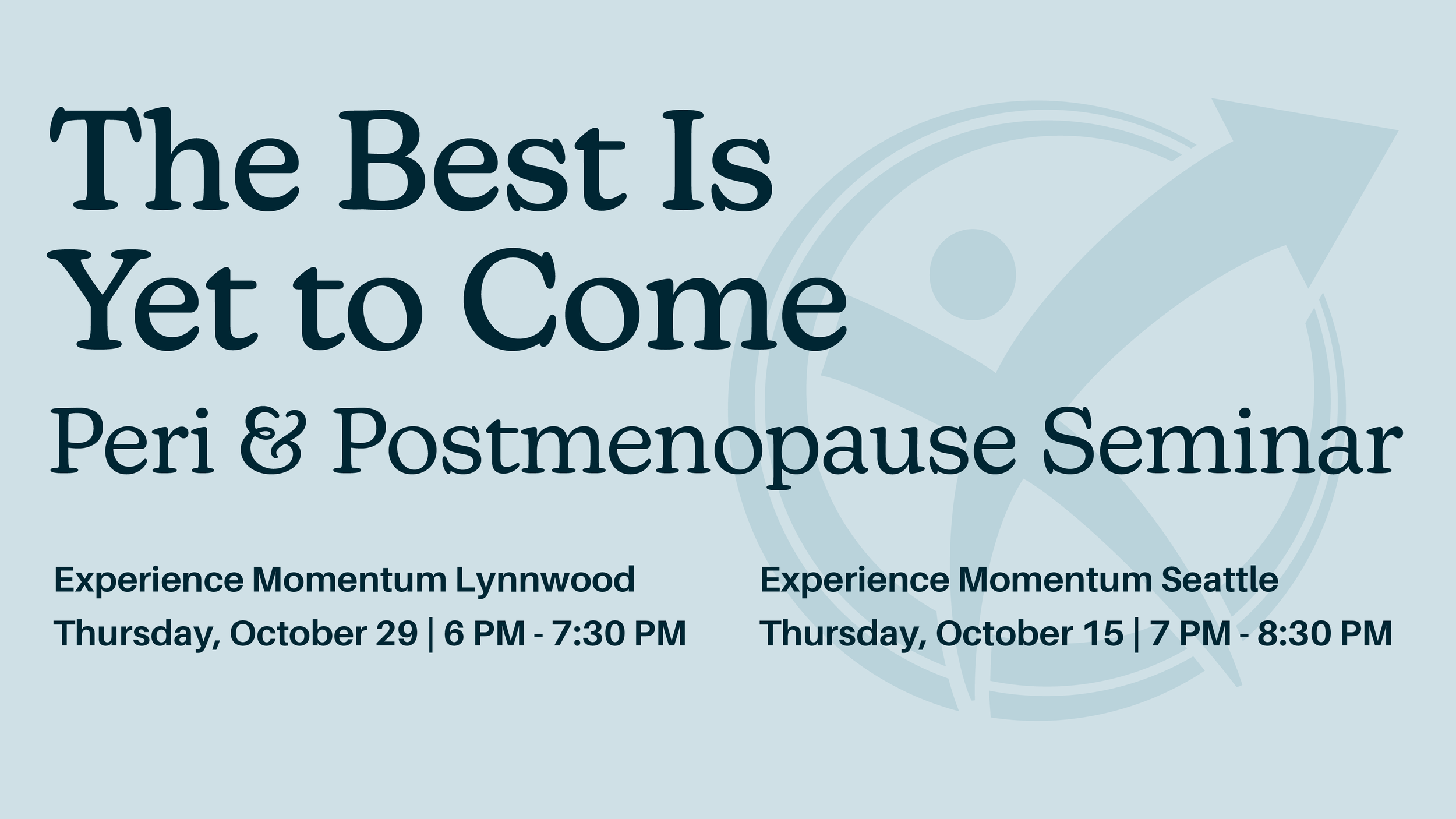
Join us for our upcoming Experience Momentum Peri & Postmenopause Seminar, where we'll take a deeper look at nutrition, movement, body image, and the changes that come with this stage of life—and, most importantly, how we can navigate them together.
Seattle Seminar:
Thursday, October 15, 2026 | 7 PM - 8:30 PM
Lynnwood Seminar:
Thursday, October 29, 2026 | 6 PM - 7:30 PM
Can’t make these dates? Sign up for our Peri & Postmenopause Seminar newsletter for exclusive updates & information about future seminars.
References
1. The North American Menopause Society. The 2022 hormone therapy position statement of The North American Menopause Society. Menopause. 2022;29(7):767–794.
2. Davis SR, Pinkerton J, Santoro N, et al. Menopause—biology, consequences, supportive care, and therapeutic options. Cell. 2023;186(18):4038–4058.
3. Deutz NEP, Bauer JM, Barazzoni R, et al. Protein intake and exercise for optimal muscle function with aging: recommendations from the ESPEN Expert Group. Clinical Nutrition. 2014;33(6):929–936.
4. Reynolds A, Mann J, Cummings J, Winter N, Mete E, Te Morenga L. Carbohydrate quality and human health: a series of systematic reviews and meta-analyses. The Lancet. 2019;393(10170):434–445.
5. Sacks FM, Lichtenstein AH, Wu JHY, et al. Dietary fats and cardiovascular disease: a presidential advisory from the American Heart Association. Circulation. 2017;136(3)–e23.
6. LeBoff, M. S., Greenspan, S. L., Insogna, K. L., Lewiecki, E. M., Saag, K. G., Singer, A. J., & Siris, E. S. (2022). The clinician’s guide to prevention and treatment of osteoporosis. Osteoporosis international, 33(10), 2049-2102