
118.5 Isn’t the Point - And That’s Exactly Why We Re-Certified as a B Corp
Where Purpose and Profit Meet
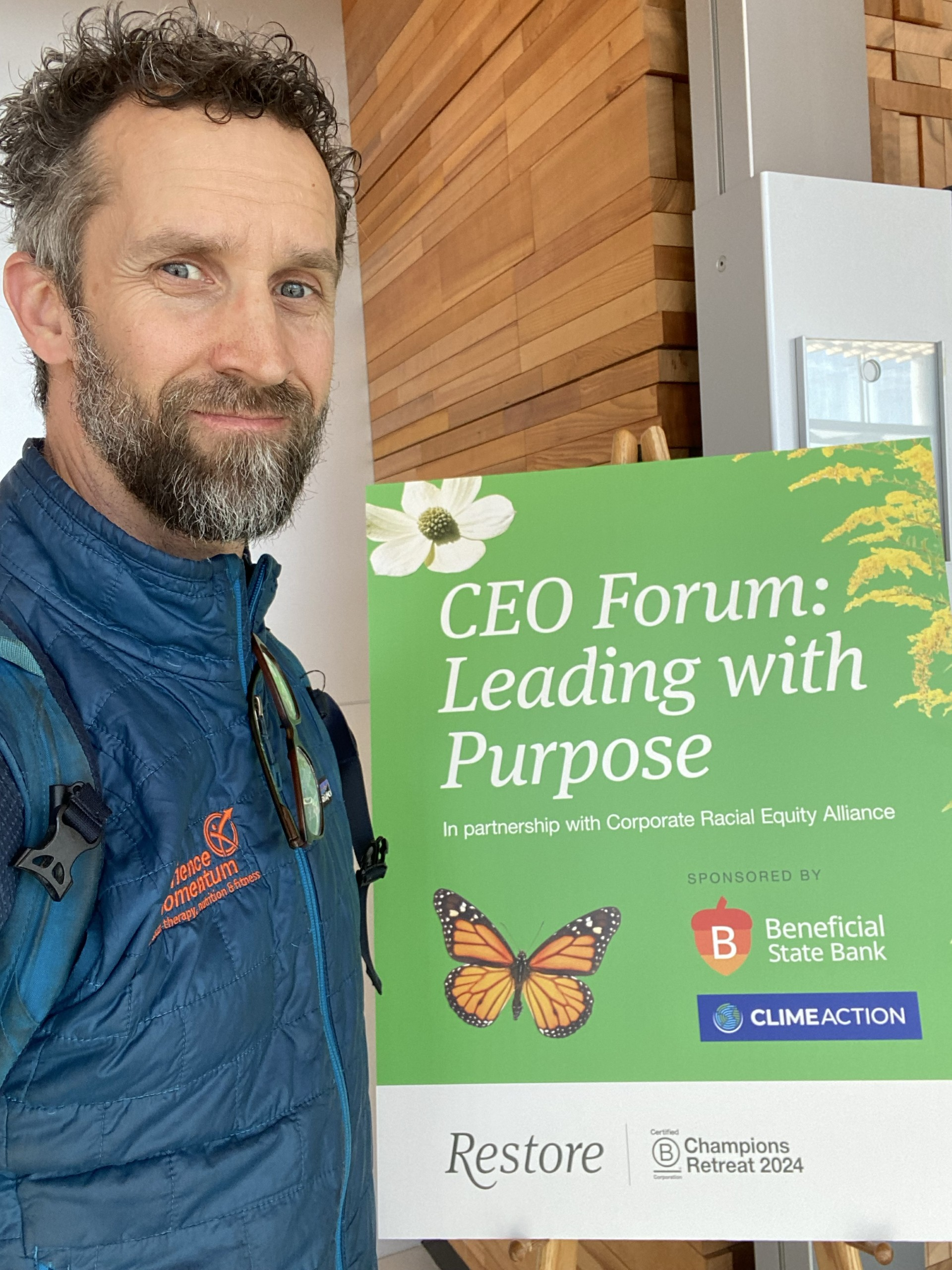
In March of 2024, I found myself on a bus in Vancouver, British Columbia, headed to the top of Grouse Mountain for the Champions Retreat.
The Champions Retreat is one of those gatherings where B Corp companies come together to learn best practices, talk honestly about what’s hard, swap strategies for doing better, and, maybe most importantly, connect with other humans who are trying to build businesses with a conscience.
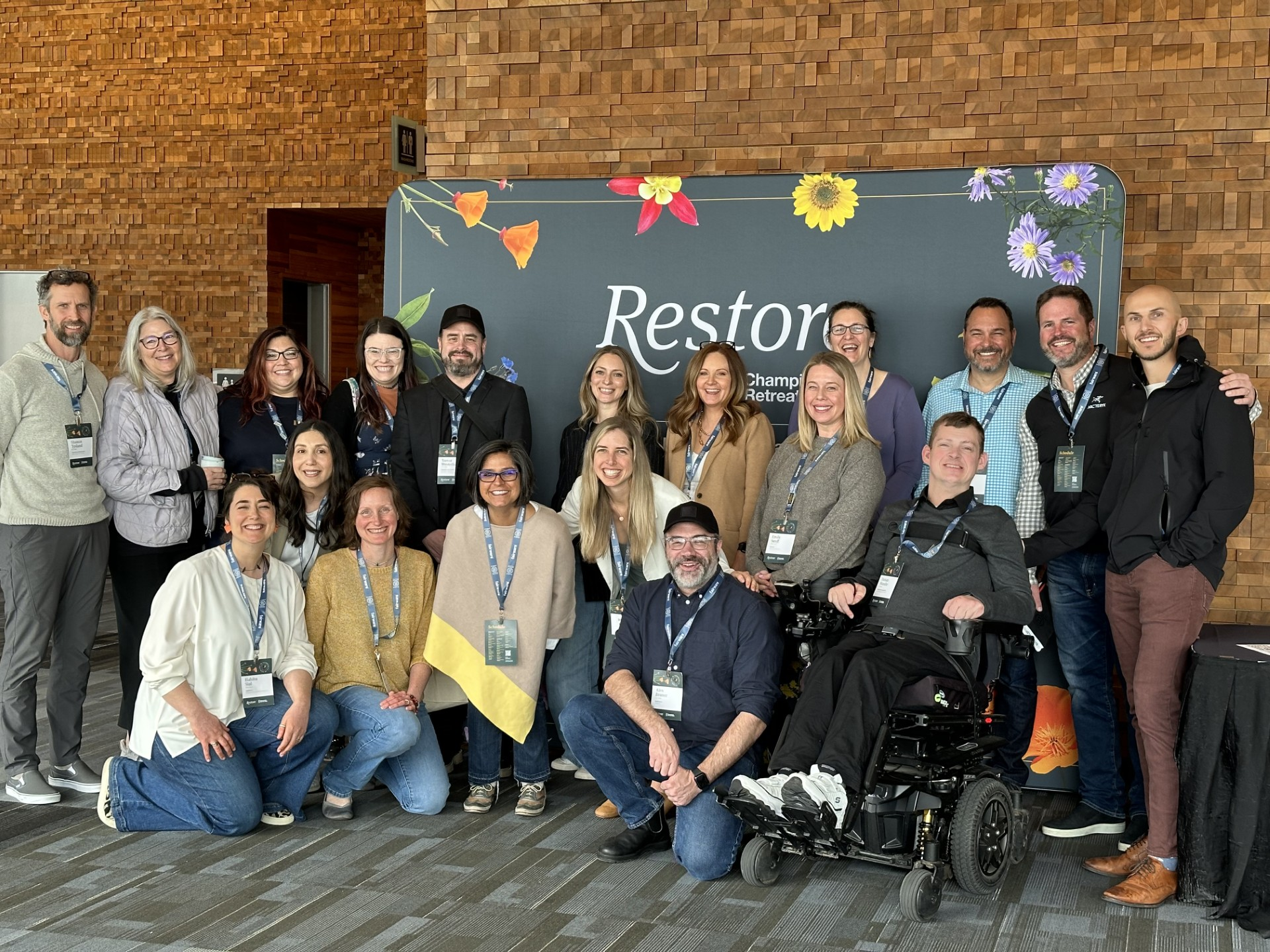
I had just come off a full day of back-to-back-to-back workshops. I was energized… and if I’m being honest, a little overwhelmed. The evening session was meant to be the “unplug” part: dinner, connection, and a gondola ride up the mountain
.
On the ride up, a guy named Nick Gardner sat next to me. The funny thing is, Nick had reached out to me by email months before, but we’d never actually connected. Even more ironic: Nick is also a client of Experience Momentum at our Seattle location. So there we were, on a gondola, talking about B Corp, business, and the planet.
And then Nick dropped a truth bomb that stopped me in my tracks.
He told me about the work he does with Premiums for the Planet, and he explained that when I pay our business insurance premiums—property, liability, all of it—those dollars don’t just vanish into thin air. They get invested. And many times, those investments can end up funding the very things we’re trying to reduce, like fossil fuel expansion.
It was a gut punch.
Here I was proud of the things we’ve been doing: donating 1% of revenue to environmental nonprofits, working on energy efficiency, putting solar on our building, hosting community events to raise money for the planet… and suddenly I realized that some of our impact might be happening quietly through money we weren’t even paying attention to.
If you’ve ever tried to do the right thing and then realized you missed something big, this will feel familiar.
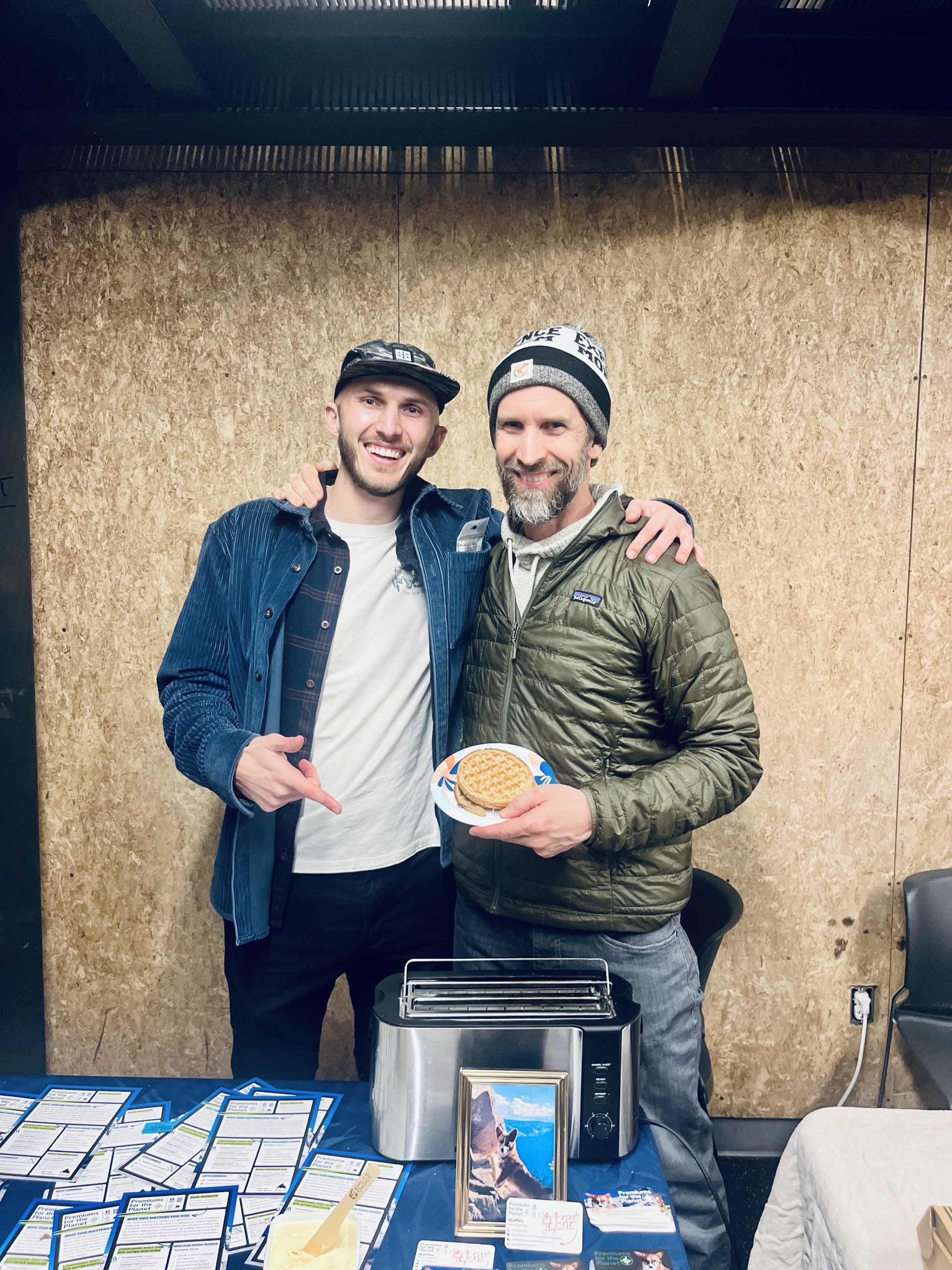
I’m deeply grateful for that conversation with Nick. And honestly? I don’t believe it was random. Because that moment led me to take a climate finance course through the B Corp community, and it opened my eyes even more to how insurance, banking, and retirement dollars can either accelerate the problem… or become part of the solution. And that is the real reason we continue to recertify as a B Corp. Not for a score. For accountability. For awareness. For the ongoing practice of becoming better.
The Announcement (Because Yes, We Did Re-certify)
We just completed our third B Corp assessment, and our score came back at 118.5. Here is a quick snapshot of the journey:
2018: We became a Certified B Corp (score 91.1), and to our knowledge, the first B Corp in the world offering physical therapy and fitnessunder one roof.
2022: We re-certified (score 108.5)
2025: We re-certified again (score 118.5)
That upward trend is cool. I’m proud of it. But I also want to say something plainly:
I don’t give two shits what our score is.
Okay, that’s not entirely true, I care enough to do the work and improve it. But the number itself isn’t what motivates me. What I care about is what the score represents.
A B Corp score is basically a receipt for a thousand decisions, many of them unglamorous. It’s a measure that we can be better… and a reminder that we still have work to do.
So… What is a B Corp?
Certified B Corporations are companies verified as meeting standards for social and environmental performance, transparency, and accountability. They are businesses that choose to be held accountable to a higher standard than “maximize profit” and are part of a global movement working to benefit people and the planet. It’s a third-party certification that evaluates a company’s impact across areas like:
how we treat and support our team
how we serve our customers
how we show up in our community
how we operate in relationship with the environment
how we build accountability and transparency into governance and decision-making
In other words: B Corp is a framework that helps answer a hard question:
At the end of the year, what defines success?
For many companies, profitability is the key metric. And look, profit matters. If you can’t keep the lights on, you can’t serve anyone. You cease to exist. So yes, financial health is necessary. But profit is not the full story. I like to measure success through the lens of impact.
Impact on Our Team: The Part That Keeps Me Up at Night (in a Good Way and a Hard Way)
If you work in healthcare, or you’ve tried to run a healthcare business, you know the tension I’m talking about. The cost of living keeps rising. Student loan debt for many clinicians is real. And reimbursement pressures are, in many cases, not improving. So our team members can be doing incredible work, life-changing work, yet still feel squeezed just trying to stay above water. That’s not okay. And it’s not simple.
Being a B Corp doesn’t magically solve healthcare economics. But it forces us to keep looking at the question that matters:
Are we building a place where our people can thrive, not just survive?
We’re not perfect. Not even close. But we are committed to getting better: better systems, better support, better development, better sustainability of careers, better leadership. B Corp helps keep that commitment from turning into a nice poster on a wall.
Impact on Our Planet: The Stakeholder That Affects Everyone, and Has No Voice
We’ve been a 1% for the Planet partner since 2013, donating 1% of our revenue (not profit) to environmental nonprofits. That distinction matters.
Some years we’ve finished in the red, and we still wrote the checks. Not because it was easy, but because the planet doesn’t get a vote in quarterly earnings calls, yet it impacts every single human being who lives here. We try to connect a truth that feels obvious once you say it out loud:
The health of the planet is directly connected to the health of the human body.
Clean air. Clean water. Stable food systems. Heat, smoke, displacement, stress. It’s all connected. And because we’re a wellness company, we believe this connection isn’t a “bonus topic.” It’s part of the work.
The Quiet Decisions Behind the Number
Here’s what a B Corp score is really made of. Not marketing. It’s made of the quiet decisions:
the policies you build when no one is clapping
the vendors you choose (or stop choosing)
the benefits you decide are worth it
the trade-offs you make when the easy path is right there
the way your systems either support humans… or grind them down
That gondola conversation with Nick showed me another category of “quiet decision” I’d barely thought about:
Where your money sits when it’s not in your hands
The climate finance rabbit hole was eye-opening. Because it turns out your values don’t only show up in what you buy or what you donate.
They show up in:
where you bank
how your insurance premiums are invested
what your retirement plan invests in
This is part of why we made changes this past year:
We shifted our insurance partnerships to align more closely with climate-conscious standards through Premiums for the Planet.
We also moved our 401(k) to partner with Vestwell and Carbon Collective, with the goal of aligning investments with the health of the planet (and a big shout-out to Breene Murphy, who’s been instrumental).
Would we have made these changes without the B Corp community and framework nudging our awareness?
Maybe eventually. But I’m confident we wouldn’t have made them as intentionally, or as soon.
How We Try to Live This Locally (And Have Some Fun Doing It)
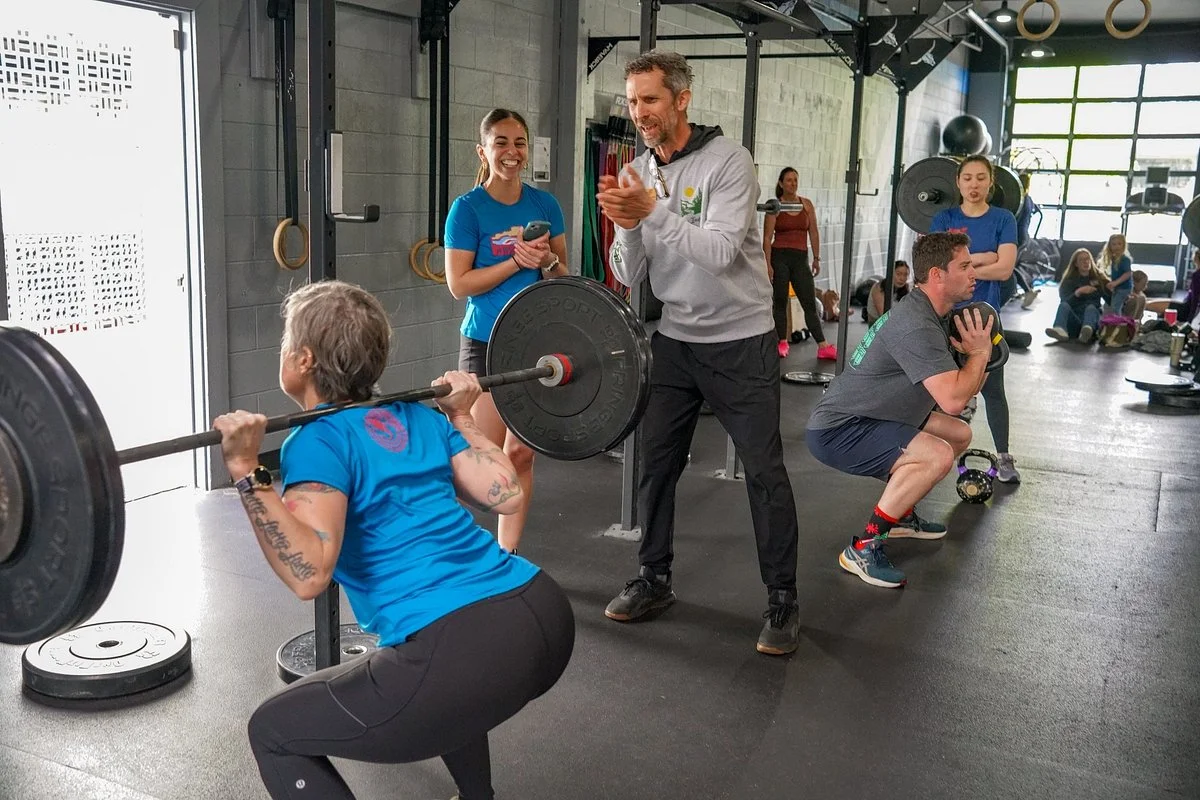
We’re not here to be perfect. We’re here to be in it. That’s why we host events like Sweat for the Environment and Winter Stoke, spotlighting environmental partners like Protect Our Winters while living our mission:
Connect, educate, support, and empower our community, clients, and team members to redefine what’s possible.
It’s not just about writing a check. It’s about building a culture where doing good is normal, and where people feel invited into the work, not shamed into it.
(Also, if we can do something meaningful and have a ridiculous amount of fun, that feels like a win.)
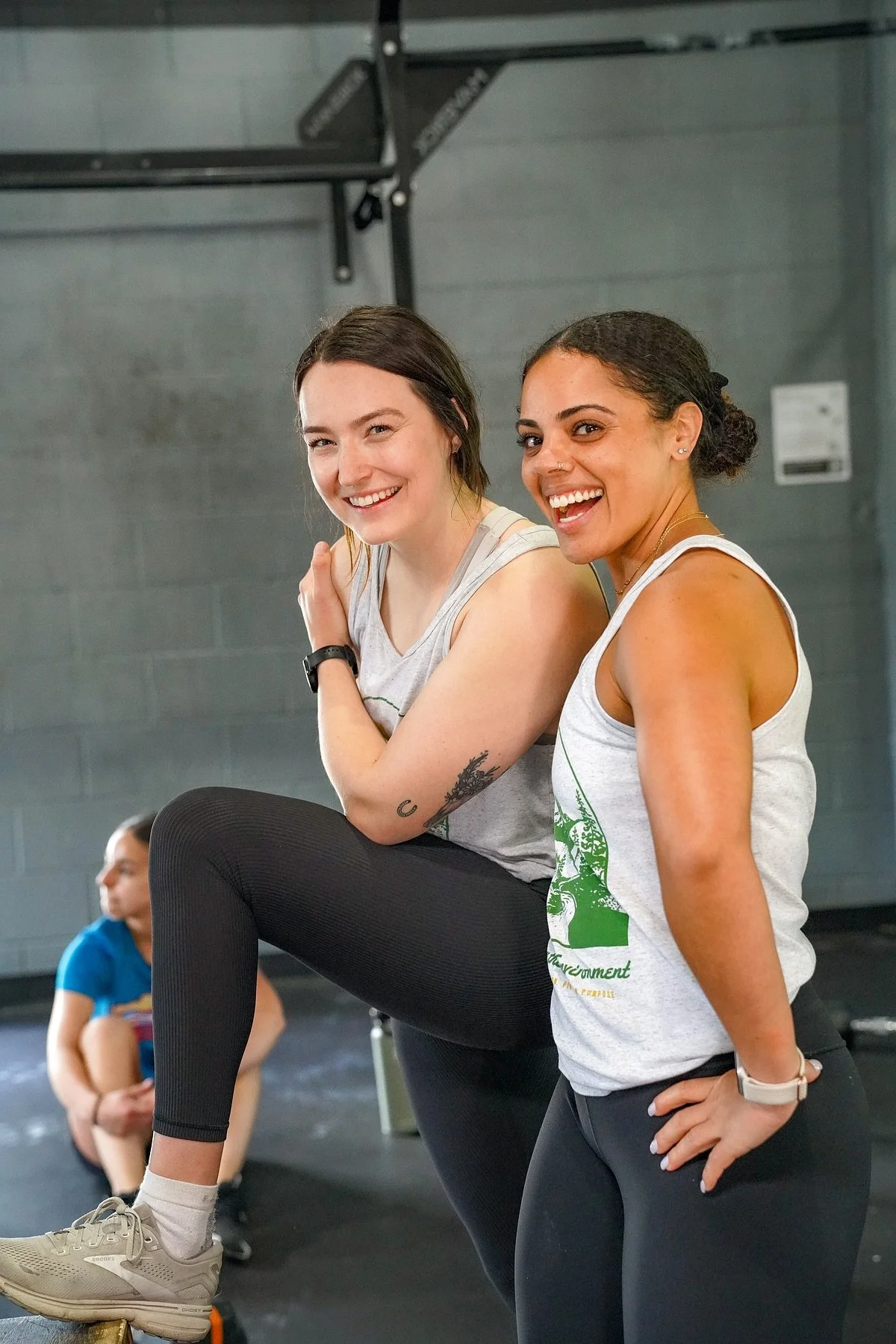

Why the Score Matters (Even Though It’s Not the Point)
A score is a snapshot. It’s not an identity. It’s not a trophy. It’s not a “we’ve arrived.” It’s a measurement that helps answer:
Where are we strong?
Where are we inconsistent?
Where are we still avoiding the hard work?
The uncomfortable parts are the most valuable parts, because they show you where your values aren’t fully in your systems yet. And that’s why we’ll keep doing this, even when no one’s watching.
This Belongs to the Team
This isn’t a “leadership achievement.” A B Corp certification is the result of hundreds of daily decisions made by our team:
coaches creating belonging and momentum
clinicians delivering care with integrity
front desk teams creating clarity and connection
operations and leadership teams building systems that support humans
To our team: thank you. This score, whether we care about it or not, is a reflection of your consistency and your heart.
If You’re Reading This and Wondering Where to Start
If you’re a client: thank you for choosing a business that’s trying to measure success by impact, not just income.
If you’re a founder or operator: start small, but start real. Take an assessment. Invite outside accountability. Let it reveal what you don’t yet see.
Because the truth is: most of us want to do better. We just need a structure that helps us keep choosing “better” when it’s inconvenient. And that’s what B Corp has been for us.
If you have questions about B Corp certification, 1% for the Planet, climate-aligned insurance and investing, or how we’re trying to build a better workplace in healthcare—I’m here. Reach out. I’m happy to share what we’ve learned (and what we’re still learning).
Listen to the latest episode of the Redefine What’s Possible podcast
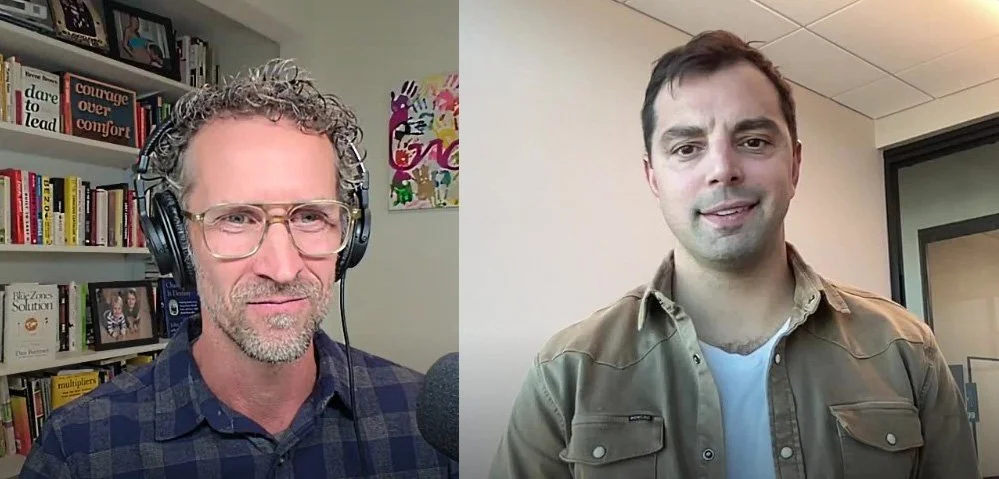
Longevity isn’t something you chase with willpower—it’s something that can ensue when your community is designed for it.
In this latest episode, Shanon sits down with Danny Buettner Jr., Executive Vice President of Blue Zones, to talk less about perfect personal habits and more about the real lever that changes outcomes: environment and culture. The original Blue Zones offered the learning. Blue Zones America is the application—partnering with cities, school districts, employers, and health systems to make the healthy choice the easy (and often unavoidable) choice.
Danny breaks down what Blue Zones America looks like on the ground—how communities build momentum through people, places, and policy; why “readiness” matters; and how leaders can create measurable wellbeing shifts that don’t rely on Superman discipline. They also unpack the forces working against health in modern life, and why the next era of longevity will be won through community design, not individual guilt.
If you’re a leader, parent, clinician, or anyone tired of feeling like health is one more thing to “try harder” at, this conversation offers a hopeful blueprint for building a life—and a city—where wellbeing can actually unfold.